
COUNTING. All musicians are tasked with it. Whether one plays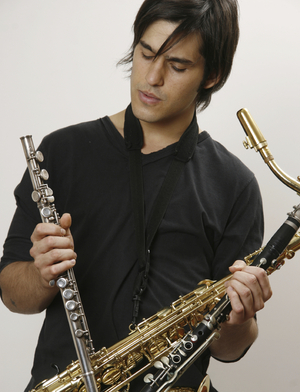 the flute, trumpet, cello, or sings, we have to count. While studying as an undergraduate, my clarinet teacher made sure to instill in me what he thought were the fundamentals of musicianship. He would constantly remind me that rhythm comes first. Before notes, before articulation, before phrasing, the rhythm must be accurate and steady. When the rhythm is counted correctly and the tempo steady, the articulation and phrasing often fall into place quickly.
The first step towards counting rhythm accurately requires the most important tool any musician has at his or her disposal--a pencil. When confronted with a confusing rhythm, it becomes every musician's responsibility to mark in the downbeats. One can simply mark a vertical slash over each beat. I still do it to this day, and I've been playing the clarinet over 20 years. Penciling in the downbeats emphasizes the important "landmarks" in a measure. When tapping one's foot, each foot tap should line up with each penciled downbeat.
The next step involves something some instrumentalists despise while others enjoy. SINGING. I'm not talking about belting high notes like Pavarotti. By singing, I simply am referring to singing rhythms on the syllable "tah." The rule I have with all of my students is, "You can play it when you can sing it." When one can produce the sound of the rhythm from ones own body, it makes performing the rhythm on the instrument infinitely easier. So, do not be afraid to put down your instrument, start tapping your foot, and sing the rhythms aloud when practicing.
The last step of course is to perform the rhythm on the instrument. Hopefully after steps 1 and 2 have been accomplished, this last step should come quickly. I often go through steps 1 and 2 with my beginner/intermediate students during our lessons. After having gone through these first two steps, if a student makes a mistake while playing, I'll have them sing it again.
The rhythm is what gets us from the left side to the right side of the page. As I mentioned earlier, when the rhythm is accurate and played with confidence, melodies become easier to hear and shape. If you follow the 3 steps (penciling, singing, playing), I guarantee it will is assist you in gaining confidence when counting rhythms.
Joseph Pinto, Clarinet Teacher
the flute, trumpet, cello, or sings, we have to count. While studying as an undergraduate, my clarinet teacher made sure to instill in me what he thought were the fundamentals of musicianship. He would constantly remind me that rhythm comes first. Before notes, before articulation, before phrasing, the rhythm must be accurate and steady. When the rhythm is counted correctly and the tempo steady, the articulation and phrasing often fall into place quickly.The first step towards counting rhythm accurately requires the most important tool any musician has at his or her disposal--a pencil. When confronted with a confusing rhythm, it becomes every musician's responsibility to mark in the downbeats. One can simply mark a vertical slash over each beat. I still do it to this day, and I've been playing the clarinet over 20 years. Penciling in the downbeats emphasizes the important "landmarks" in a measure. When tapping one's foot, each foot tap should line up with each penciled downbeat.
The next step involves something some instrumentalists despise while others enjoy. SINGING. I'm not talking about belting high notes like Pavarotti. By singing, I simply am referring to singing rhythms on the syllable "tah." The rule I have with all of my students is, "You can play it when you can sing it." When one can produce the sound of the rhythm from ones own body, it makes performing the rhythm on the instrument infinitely easier. So, do not be afraid to put down your instrument, start tapping your foot, and sing the rhythms aloud when practicing.
The last step of course is to perform the rhythm on the instrument. Hopefully after steps 1 and 2 have been accomplished, this last step should come quickly. I often go through steps 1 and 2 with my beginner/intermediate students during our lessons. After having gone through these first two steps, if a student makes a mistake while playing, I'll have them sing it again.
The rhythm is what gets us from the left side to the right side of the page. As I mentioned earlier, when the rhythm is accurate and played with confidence, melodies become easier to hear and shape. If you follow the 3 steps (penciling, singing, playing), I guarantee it will is assist you in gaining confidence when counting rhythms.
Joseph Pinto, Clarinet Teacher

COMMENTS