1 min read
Does Private Acting Coaching Help With Stage Fright in Kids?
Helping Kids Overcome Stage Fright Through Acting Stage fright is something many kids experience, especially when it's time to stand in front of a...

4 min read
Valentina Jotovic
:
Updated on August 9, 2026
After-school time can feel like a race. Kids come home tired and hungry, backpacks are overflowing, homework is waiting, and screens are calling their names. In the middle of all that, music practice can easily turn into a daily argument instead of something your child enjoys.
Many parents see the same things: kids forgetting what to practice, arguing about how long to play, getting pulled into video games, or saying they are too tired. Parents feel torn between wanting their child to make progress and not wanting to push so hard that everyone ends up upset.
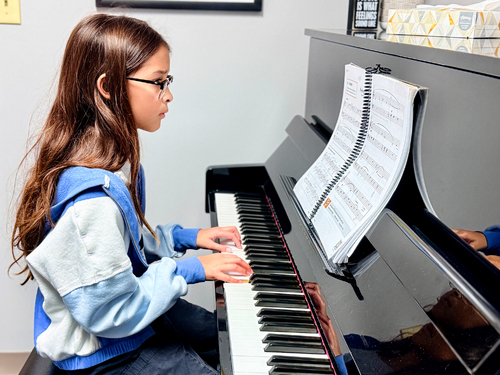
We want you to know this is normal. The good news is that a simple, steady practice routine can turn music lessons for kids in Flemington into a calm part of the day. With a few small changes, practice can become a natural habit that builds confidence, focus, and real joy in making music, acting, or dancing.
It is easy to focus on the next recital, show, or performance. But the real growth happens in the daily practice that nobody else sees. Those short sessions at home shape who your child is becoming.
Regular practice trains skills that go far beyond the arts:
Focus, because your child learns to pay attention to notes, rhythms, and directions
Discipline, because they return to the same piece even when it is not easy yet
Patience, because progress comes one small step at a time
These habits often spill into homework, sports, and friendships. A child who learns to stick with a tricky passage on piano or guitar is also learning to stick with a hard math problem or a tough drill on the field.
There is also a big emotional side to practice. Children learn how to handle frustration, how to calm themselves, and how to keep going even when they feel stuck. Then they get to feel real pride when they hear a song start to sound better each week.
Acting and musical theatre bring their own powerful benefits:
Memorization, from learning lines, lyrics, and blocking
Teamwork, from listening and responding to scene partners
Empathy, from stepping into different characters and points of view
Self-expression, from using voice and movement to tell a story
All of that grows best through consistent practice and rehearsal, not through chasing a perfect performance. A few solid days of practice each week can make a big difference for kids learning here in Flemington.
The best routine is the one your family can actually stick to. We like a simple starting point: 10 to 20 minutes of practice, about 5 days a week. Short, regular sessions usually work better than one long weekend cram.
To make this work, connect practice to something that already happens every day. For example:
After snack time, practice for 15 minutes, then start homework
Practice as soon as you walk in the door from lessons
Practice before any screen time, so it becomes the “ticket” to games or shows
Some kids focus better right after school. Others need time to move, eat, and relax first. A few are morning people and enjoy practicing before school. It is okay to try different times for a week or two and see what fits your child’s energy.
Fall schedules in Flemington can get busy with sports, clubs, and family events. When the week gets full, try:
Short “mini practices” of 5 to 10 minutes on very busy days
Planning practice times on a calendar so your child can see them
Keeping the same number of practice days, even if some are shorter
Flexibility is fine as long as the basic habit stays in place.
If practice always feels like a chore, everyone ends up frustrated. A few playful ideas can change the tone right away.
Simple motivation tools can help:
Practice charts or sticker calendars for each day completed
Small weekly rewards like choosing dessert, picking a family board game, or selecting the playlist in the car
Praise that focuses on effort, like “You stuck with that tricky part,” instead of talent, like “You are so gifted”
You can also turn practice into a game:
“Concert for the stuffed animals,” where your child introduces each piece
“Backwards song challenge,” playing sections starting from the end
“Family audience night,” once a week, where kids show one small thing they learned
“Teach the grown-up,” where your child shows you one new note, chord, or line
Acting and musical theatre skills fit right in. Ask your child to:
Play or sing as if they are a certain character
Tell a short story before they play a piece
Use different facial expressions with each section of a song
Try shifting language too. Instead of “You have to practice,” try “Let us see what you can create today” or “Show me your favorite part from this week.” Curiosity and creativity feel much lighter than pressure.
You do not have to figure this out on your own. Your child’s teachers want practice to feel clear and doable at home.
It helps to ask for a simple written practice plan each week, such as:
Which piece or exercise to focus on
What to repeat and how many times
One small goal, like “play this section smoothly” or “say the lyrics clearly”
Good communication goes both ways. Share with the teacher:
What time of day practice usually happens
Whether your child gets distracted or overwhelmed
Which songs or activities your child enjoys most
Teachers in music, acting, and musical theatre can offer “on-the-go” ideas for busy days, like clapping rhythms in the car, speaking lines before bed, or doing silent fingerings on an instrument while waiting for dinner.
It also helps to remember that not every day will be perfect. There will be tired days, busy days, and skipped days. When parents and teachers work together with a calm, steady approach, kids can stay on track without extra stress.
You do not need a fancy studio at home. A small, inviting space can make practice feel special and easy to start.
Try creating a “practice corner” with:
A sturdy music stand or surface for books
Good lighting, so your child can see clearly
A comfortable chair or bench at the right height
A spot where the instrument always lives, ready to go
A few helpful tools can support daily practice:
A tuner for string or wind instruments
A metronome app for steady rhythm
A notebook for goals, questions, and teacher notes
A simple way to record, like a phone or tablet, so kids can hear their progress
During cooler, darker months when kids are inside more, tech can keep things interesting. Backing tracks, practice apps, and recorded accompaniments can make even 10 minutes feel like mini performances.
A visible practice calendar on the fridge or wall lets your child see their own consistency. Kids often take pride in filling in each square, and that sense of ownership is worth a lot.
When practice is simple, consistent, and playful, it becomes more than just homework for music lessons for kids in Flemington. It becomes a daily rhythm that helps children grow in confidence, focus, creativity, and life skills that go far beyond the lesson room.
If you are ready to nurture your child’s creativity, confidence, and focus, our music lessons for kids in Flemington are a great place to begin. At Hunterdon Academy of the Arts, we offer patient, encouraging instruction tailored to each child’s interests and learning style. Take the next step today by enrolling in a program that fits your family’s schedule and goals.
1 min read
Helping Kids Overcome Stage Fright Through Acting Stage fright is something many kids experience, especially when it's time to stand in front of a...

1 min read
Confident Performers Become Confident Communicators Kids who sing, act, or dance already practice many of the same skills they need for school...
1 min read